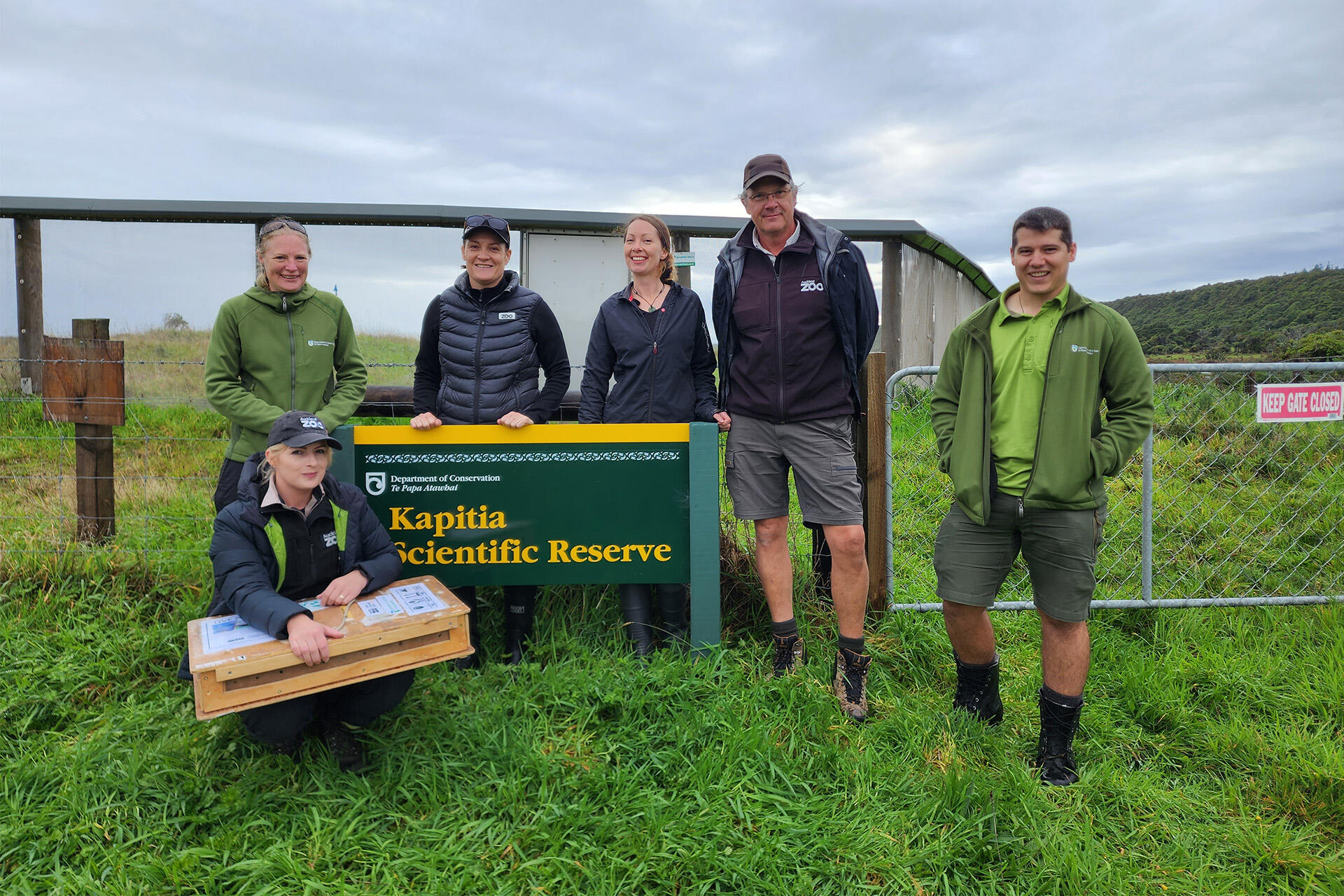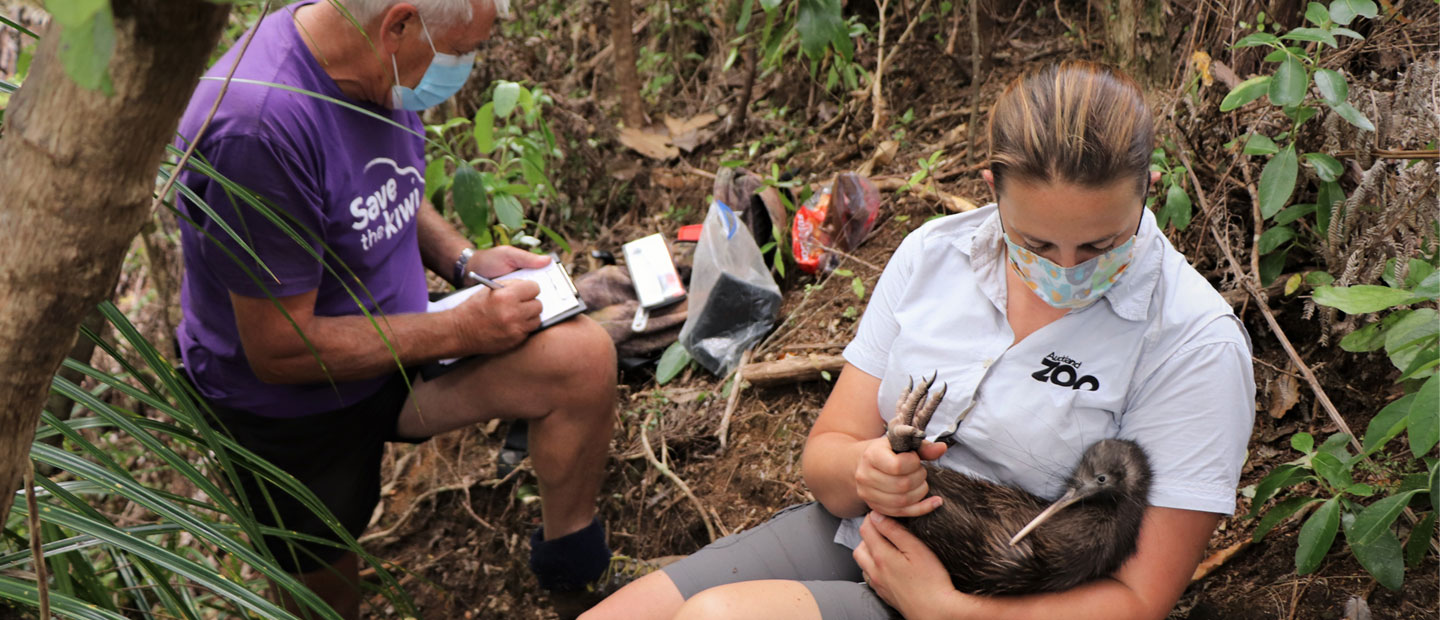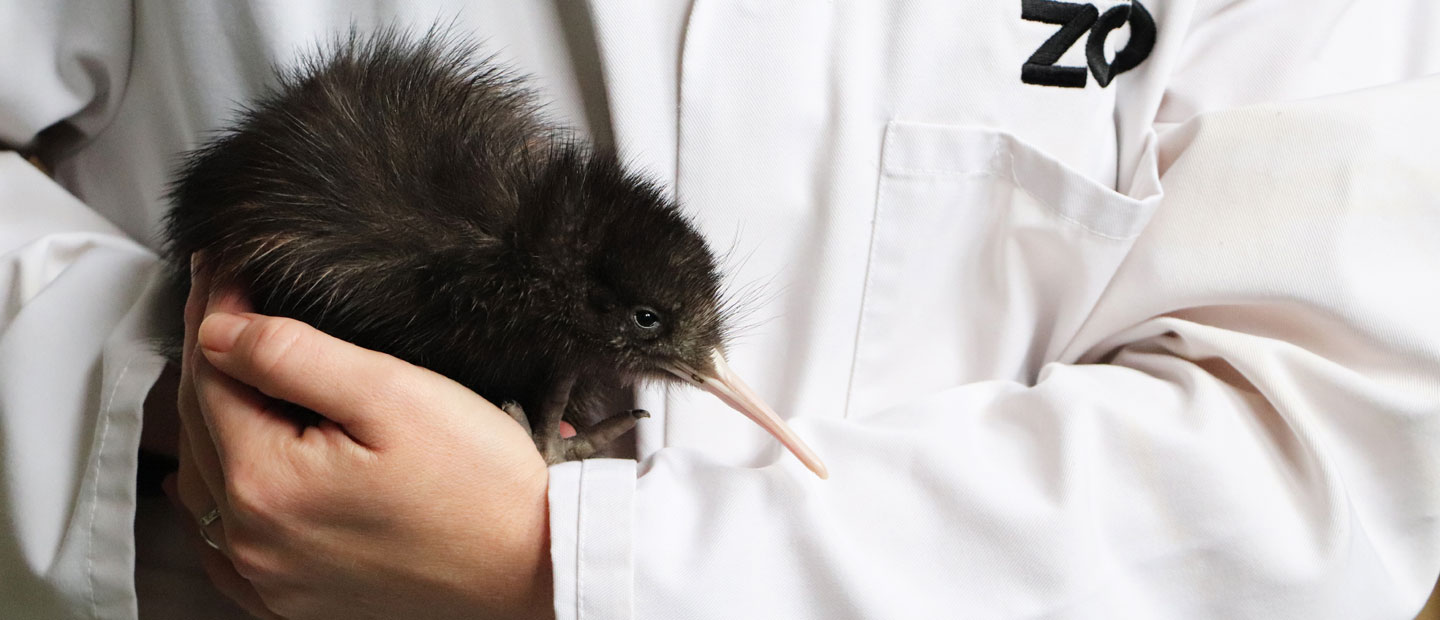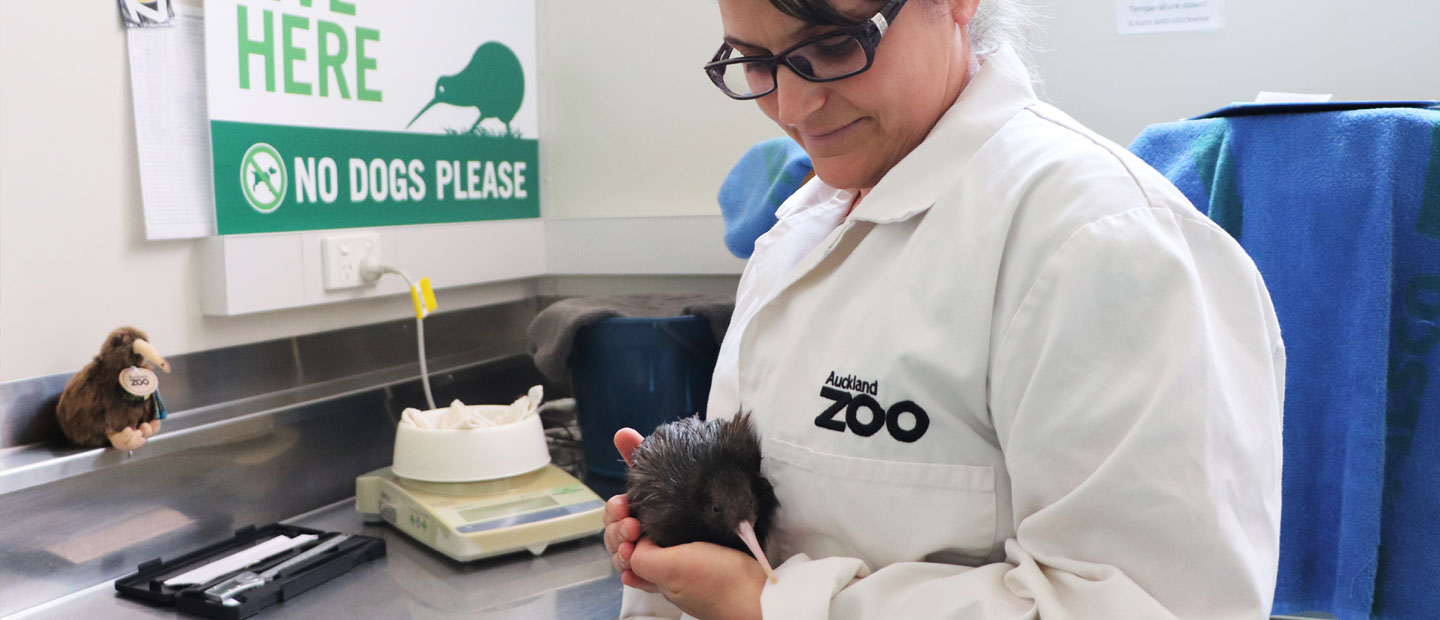

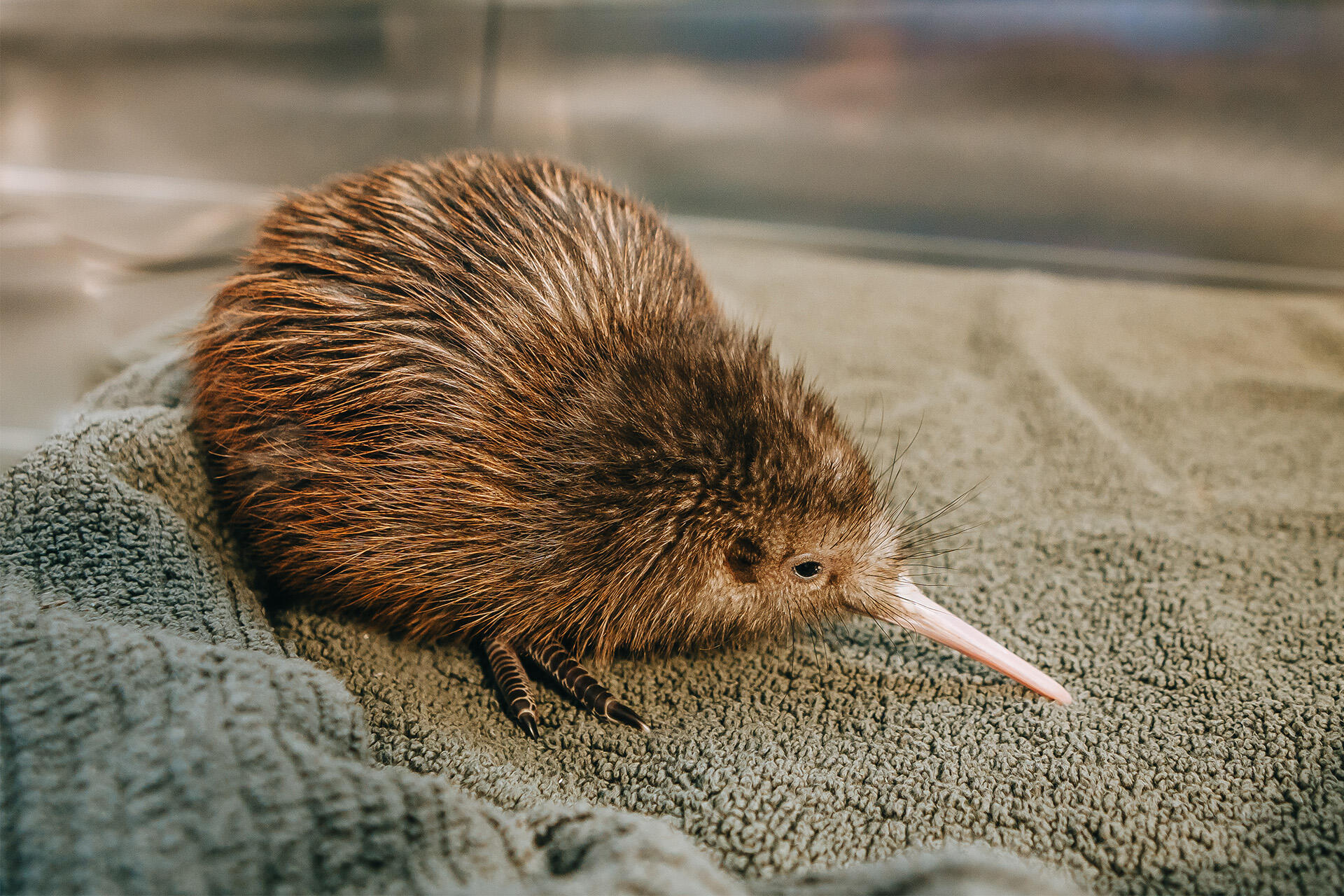
Kiwi hatched on Christmas returns to its island home
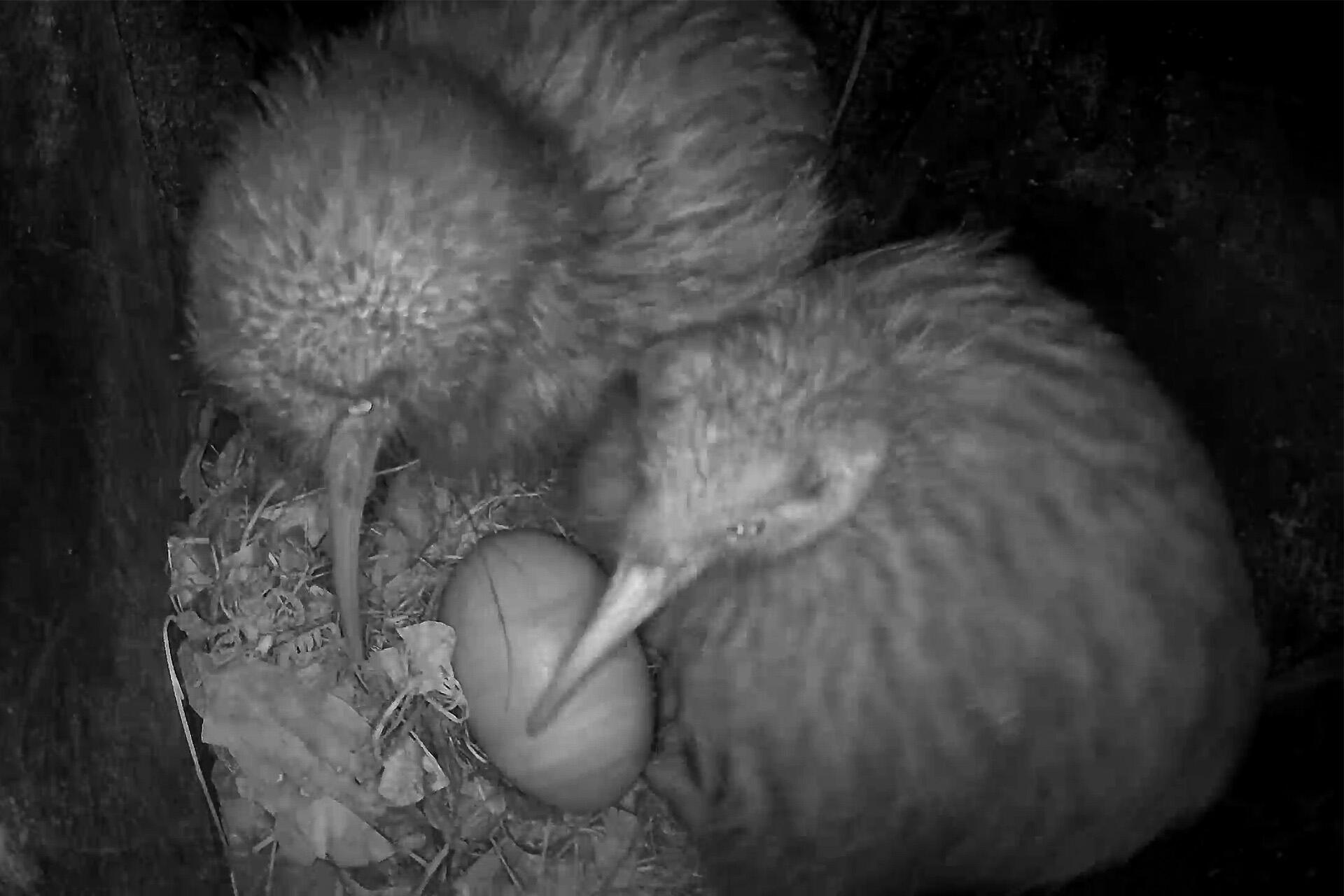
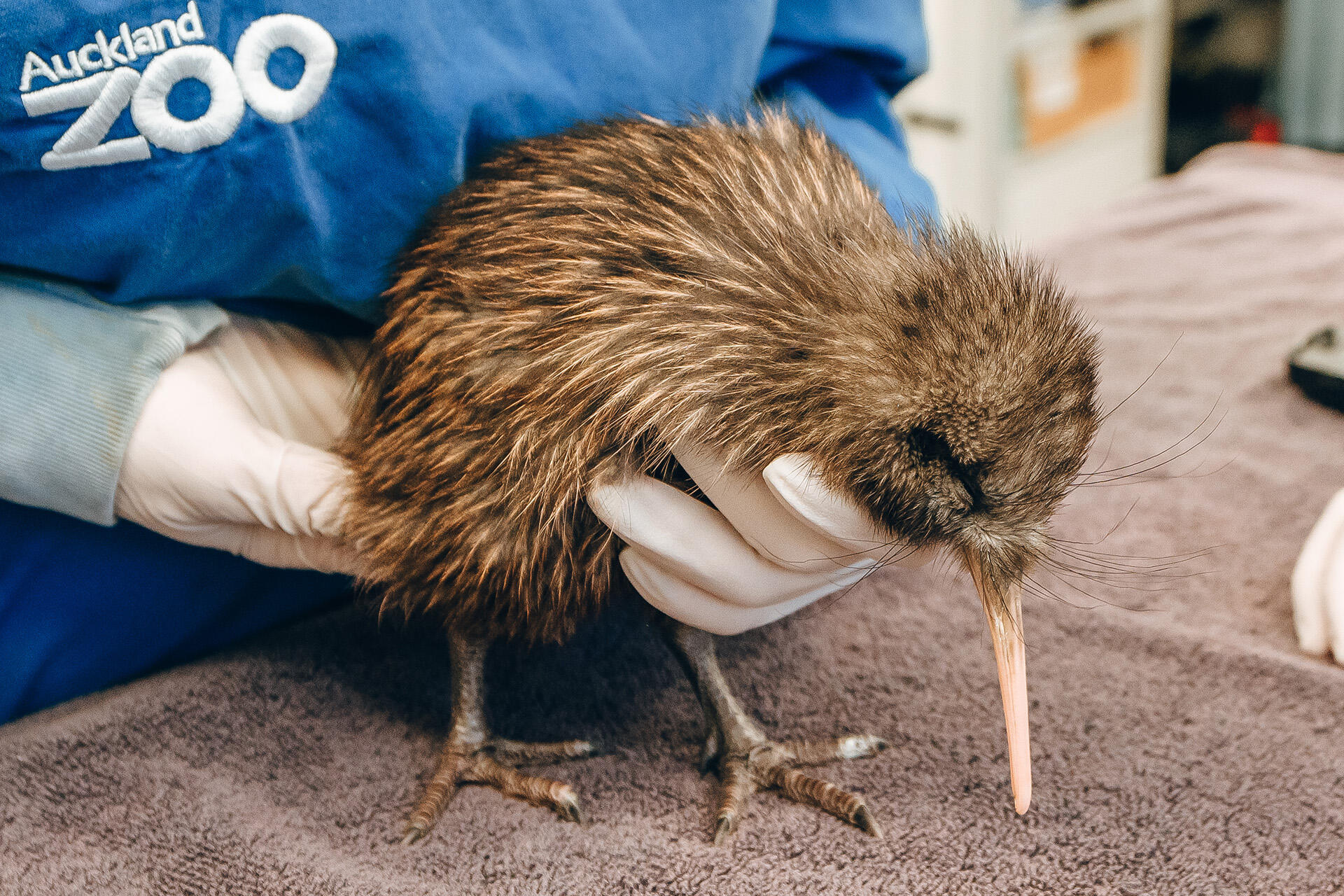
You might remember this chick that hatched on Christmas Day!
Kiwi conservation and research news.
Did you know that kiwi chicks don’t eat for the first seven days of their lives?
Unlike most birds that must feed their chicks immediately after hatching, kiwi chicks are born with a large internal yolk sac. This sac is internalised through the chick’s navel shortly before hatching, providing all the nutrients it needs to survive.
This remarkable adaptation means the chick doesn’t need to leave its burrow in those first few days. Instead spends this time being brooded by its parent in the safety of the nest and building the strength needed to begin foraging on the forest floor.
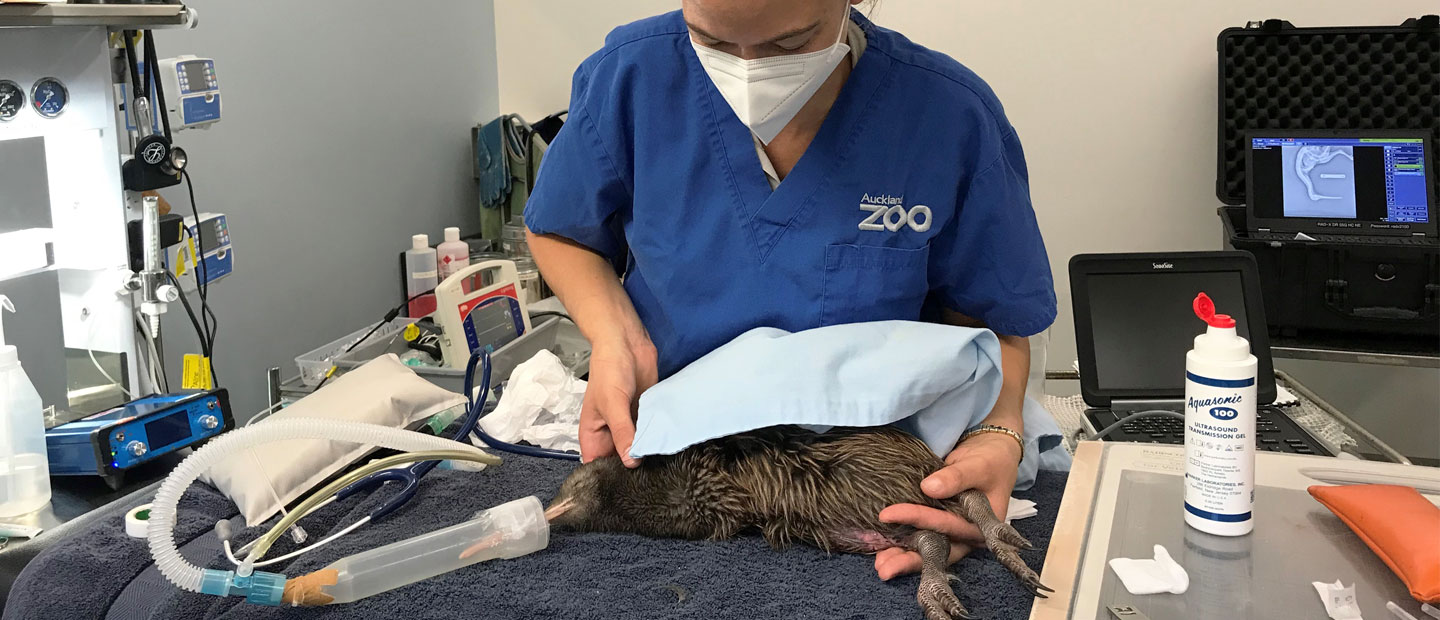
Unfortunately, this leaves them vulnerable to introduced predators, and even adult kiwi can arrive at our Auckland Zoo veterinary hospital needing treatment from dog attacks.
How can science and research improve outcomes for kiwi?
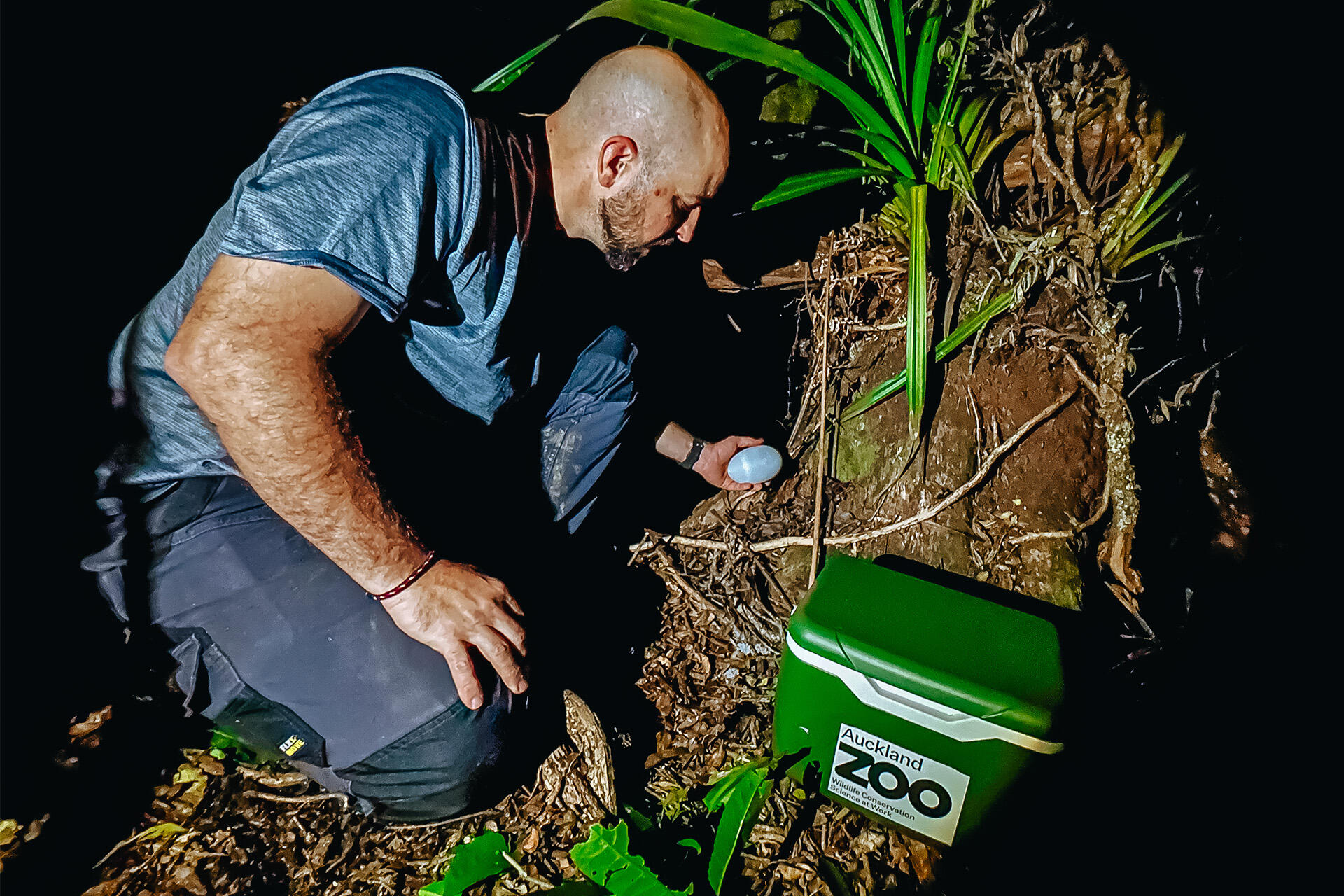
This is a question that Auckland Zoo’s curator of birds Dr. Juan Cornejo is seeking to answer, with a scientific study into the incubation parameters of kiwi eggs.
North Island brown kiwi males incubate their eggs for roughly 75-80 days. In areas where the Operation Nest Egg conservation programme is active, eggs are usually collected when the first egg laid (of a two-egg clutch) is at least 40-55 days old. These eggs are brought back to specialist organisations like Auckland Zoo for incubating and rearing, before they’re released to predator-free areas in the wild.
To date, kiwi eggs that are less than 11 days old have had only an 8% chance of hatching success when they are artificially incubated. If eggs could be incubated earlier, it would mean an increase in the eggs that could be hatched per season and improve kiwi conservation efforts.
To collect this data, Juan has developed a 3D-printed egg that can be placed under incubating male kiwi and gather important information such as the temperature gradient across the egg, the humidity around the egg, and how often and at what angles the egg is turned.
Read more about these efforts in our kiwi conservation news.