
Active by day
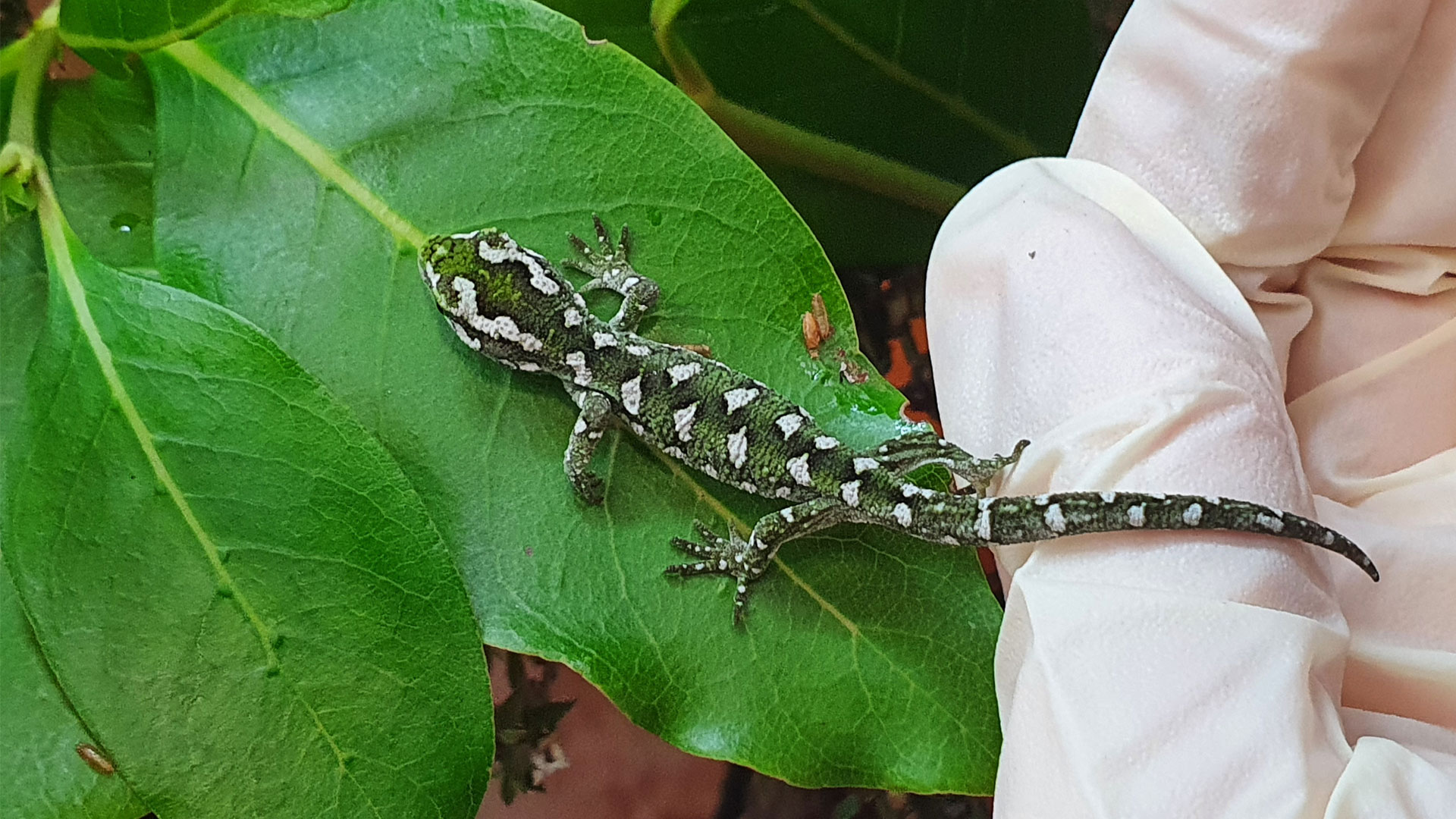
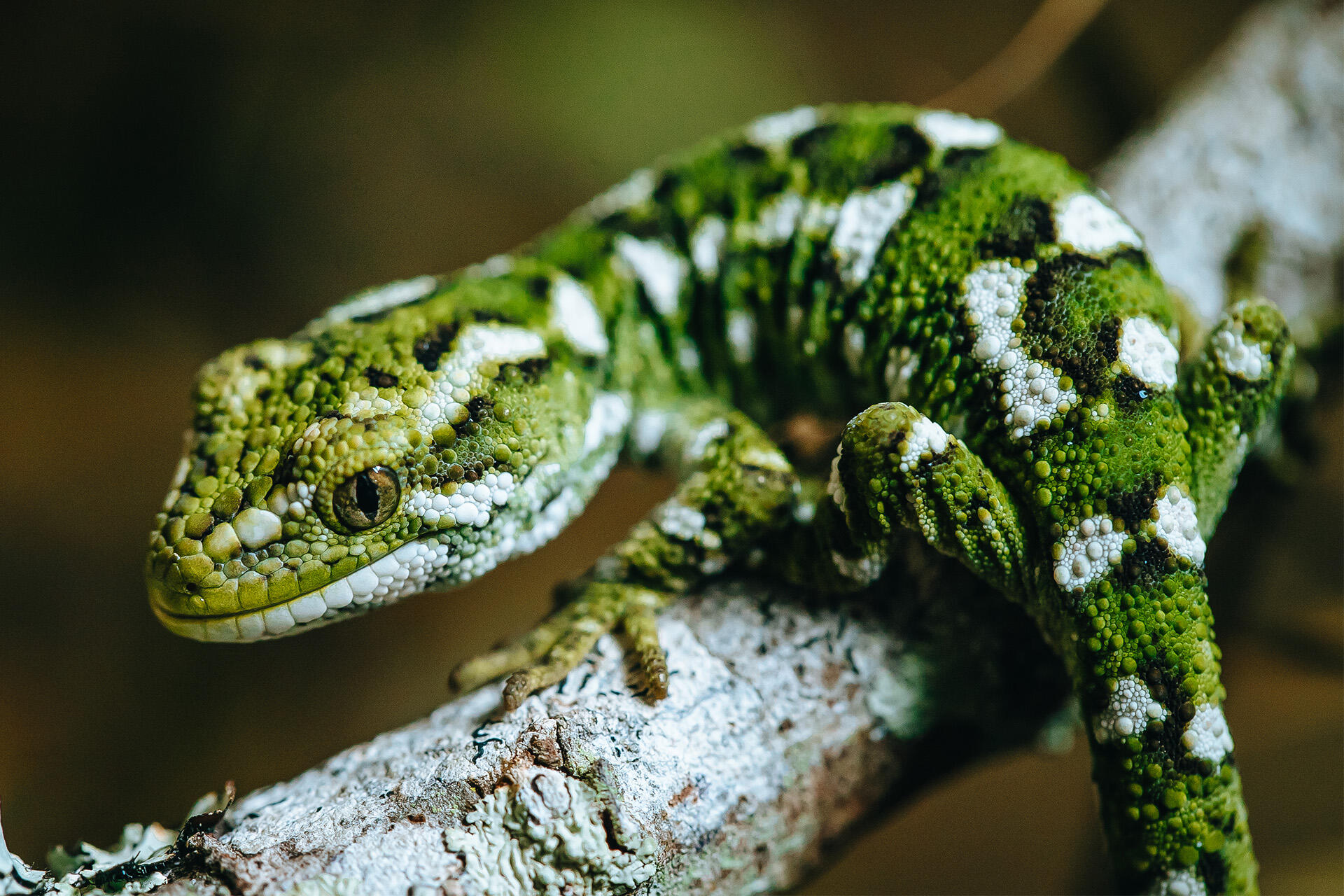
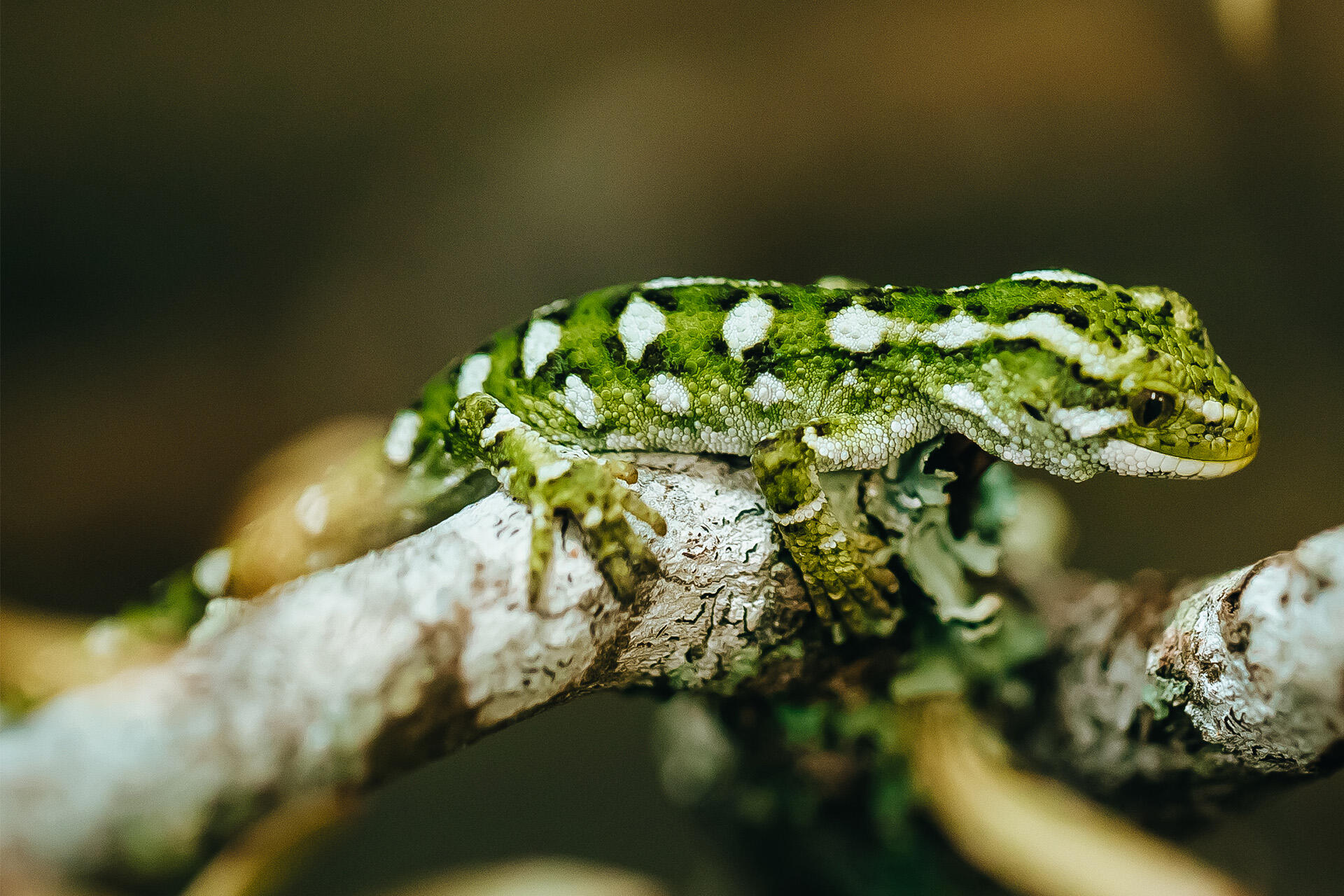
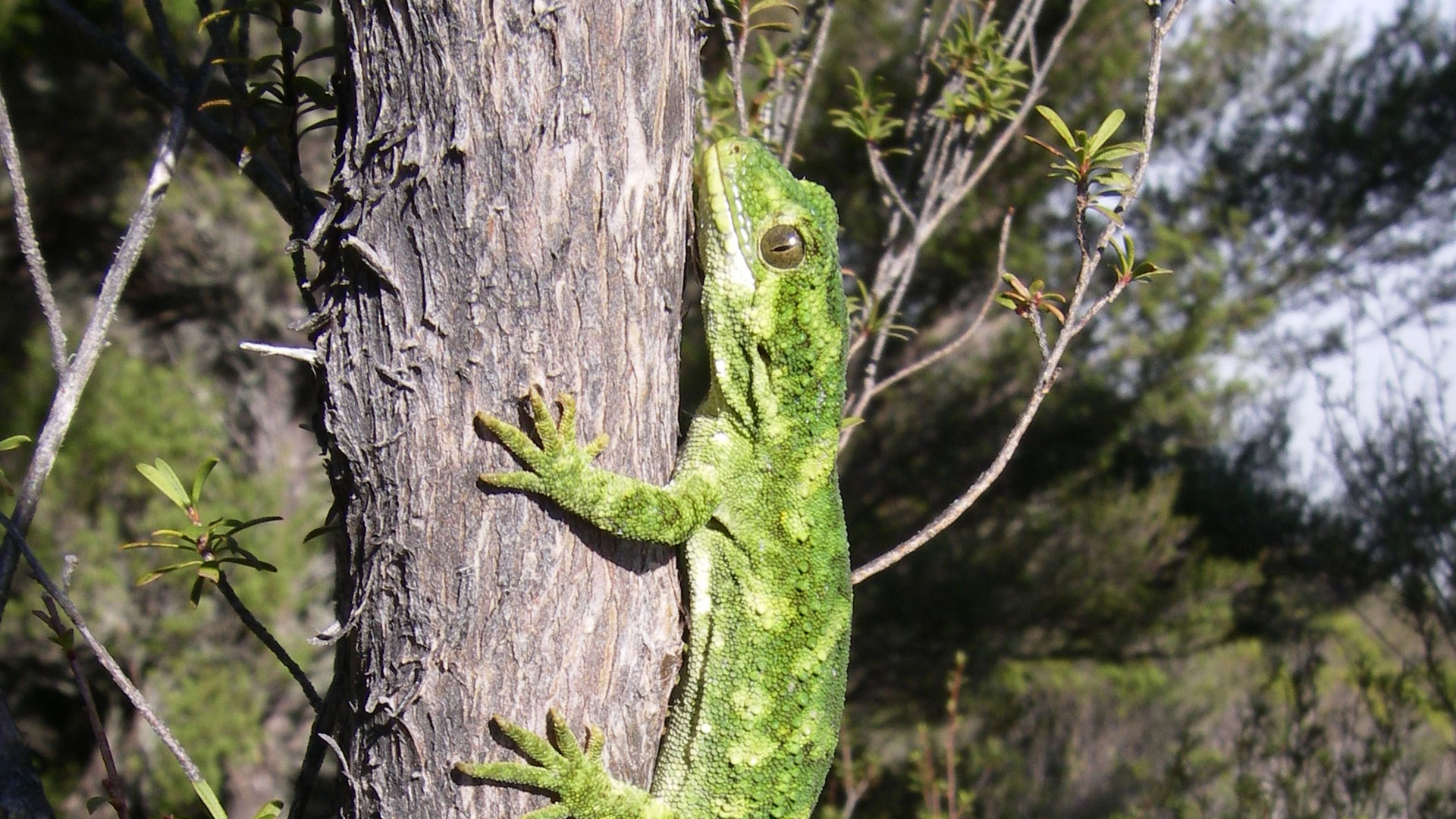
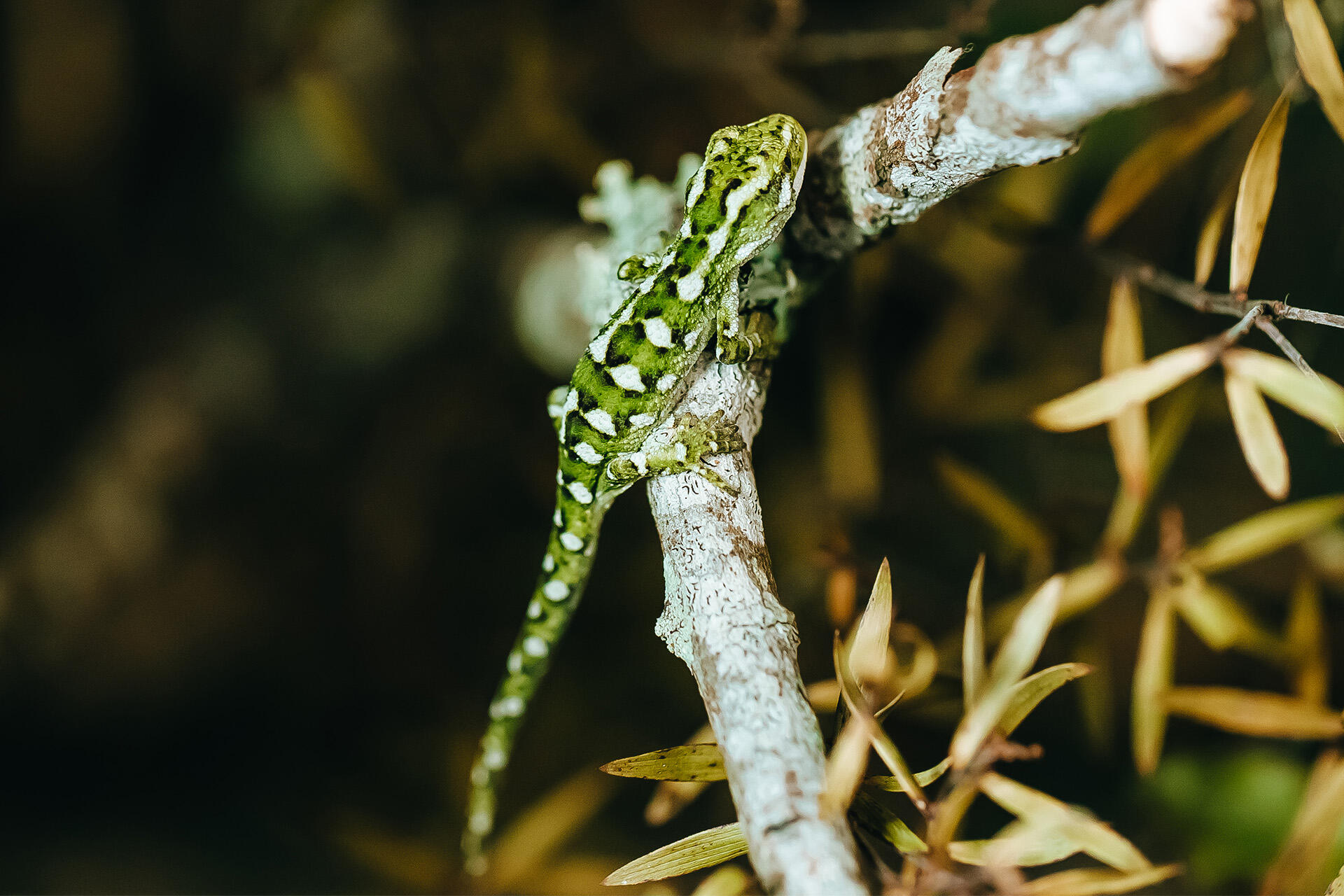
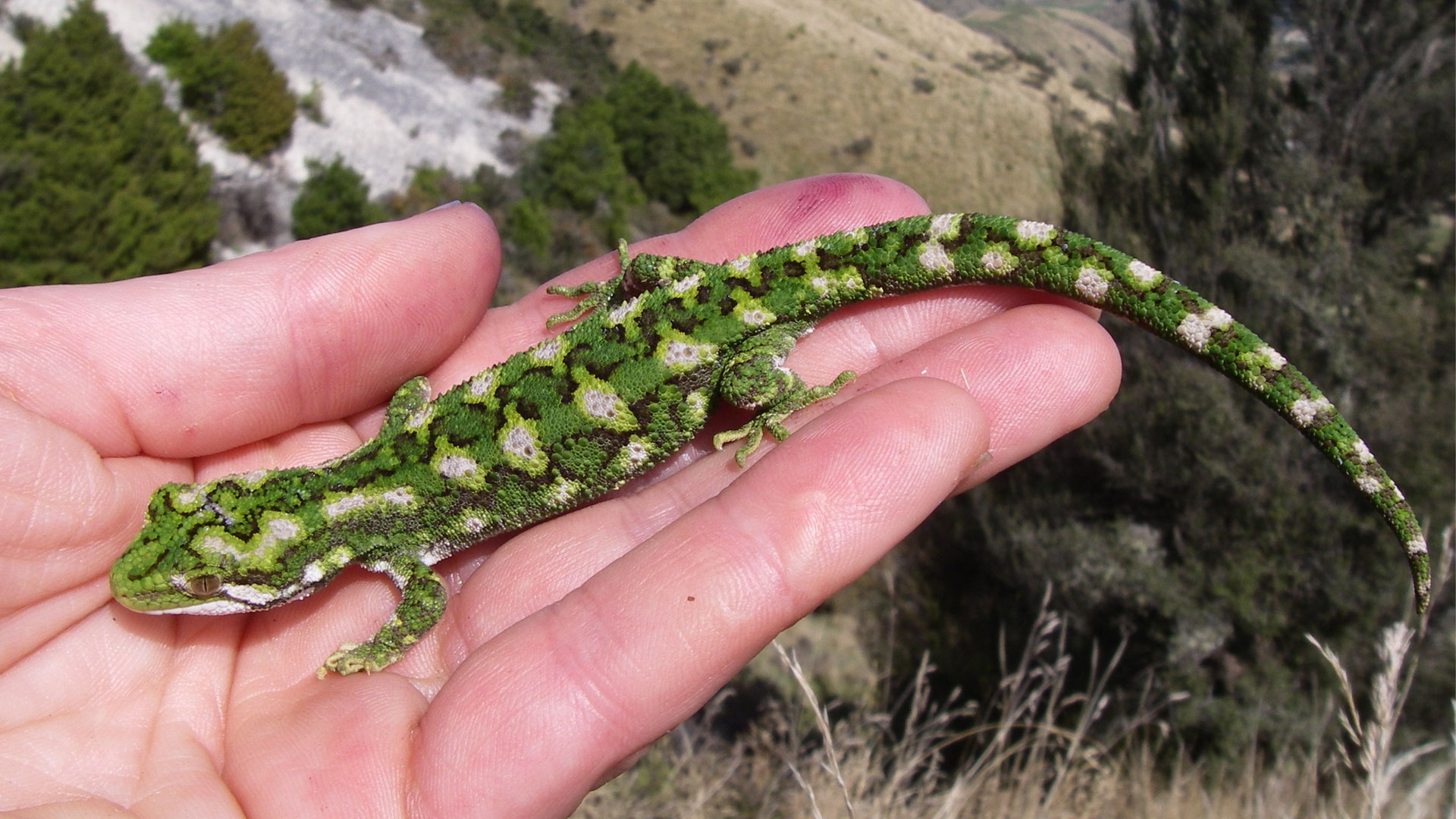
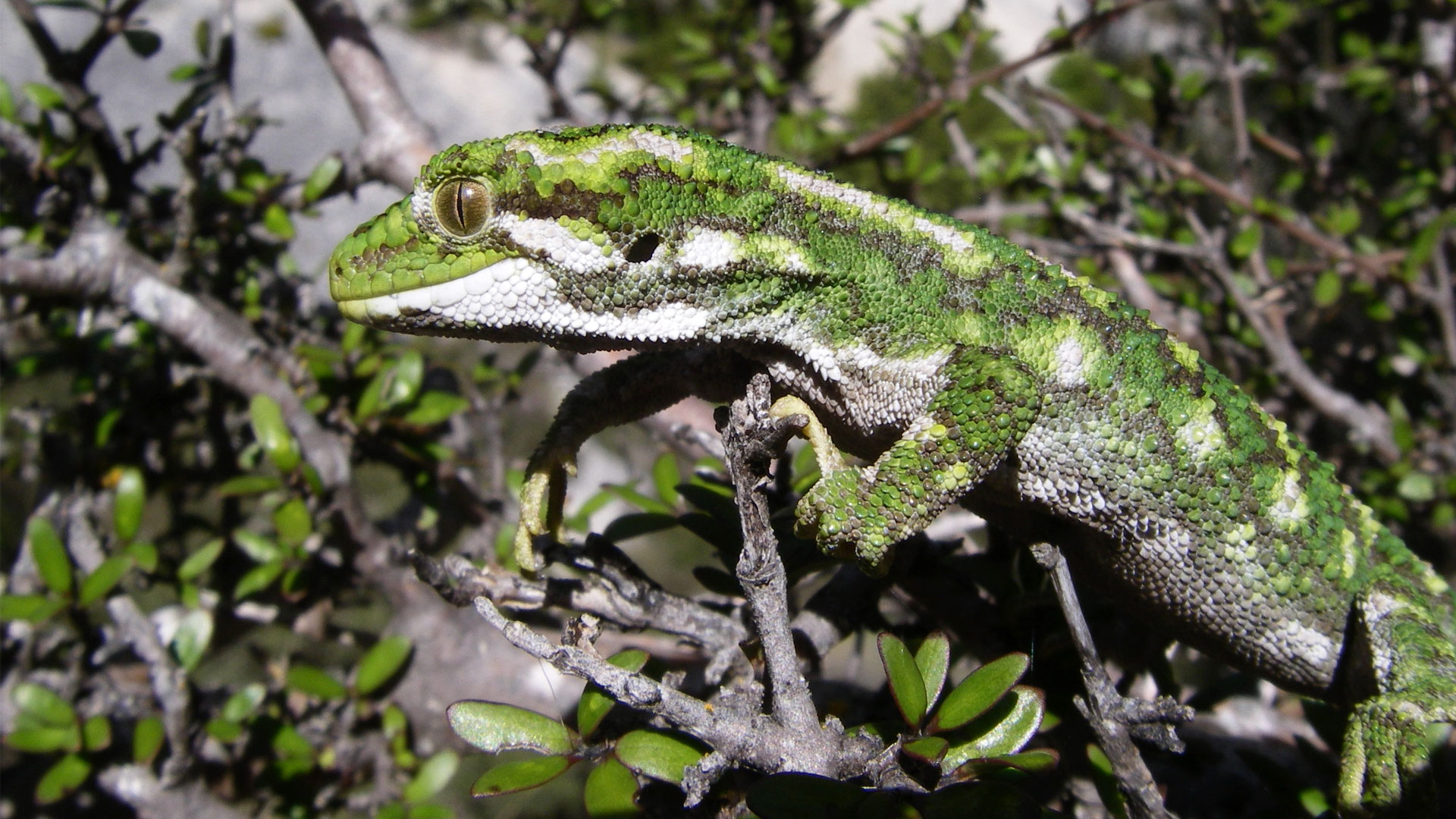
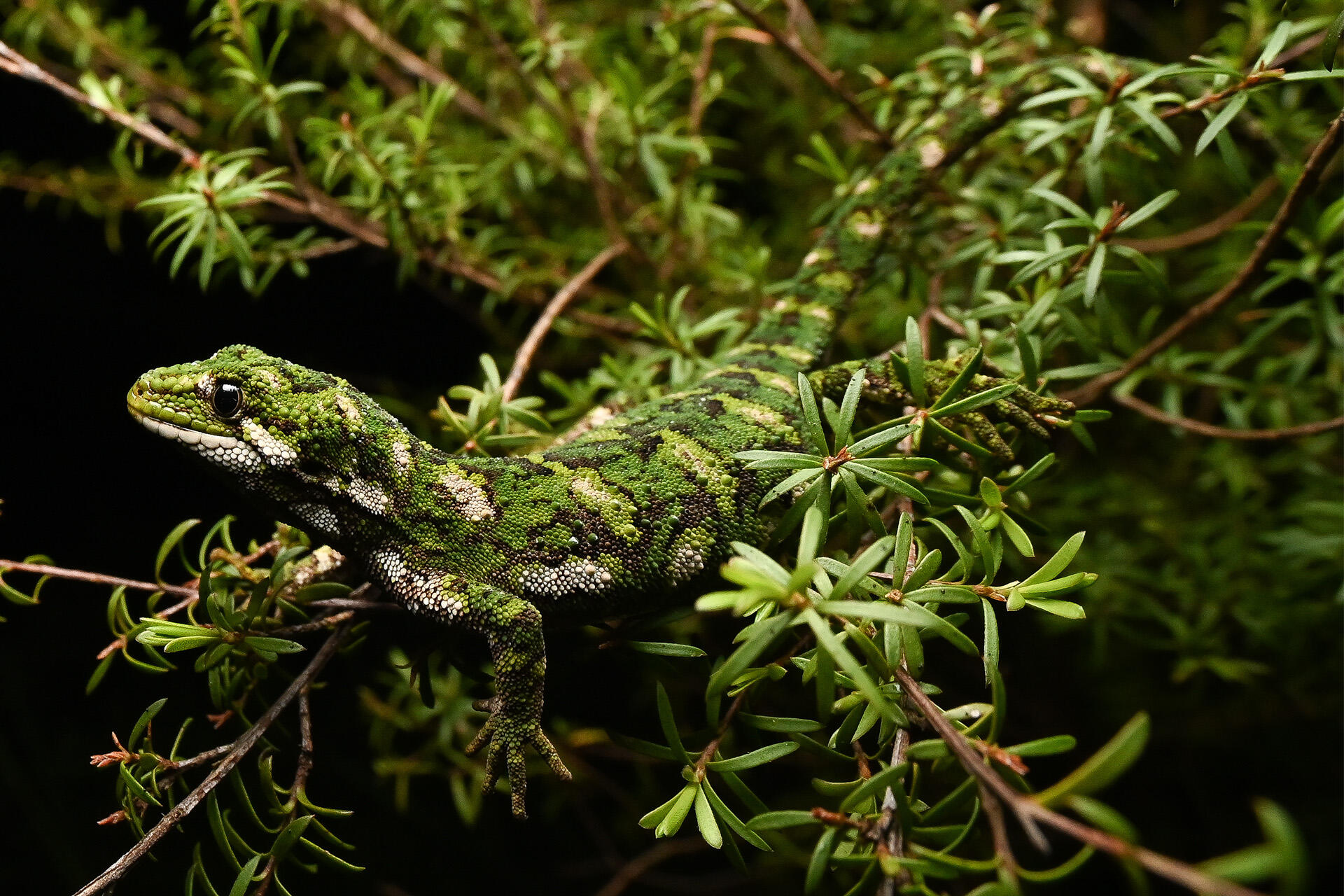
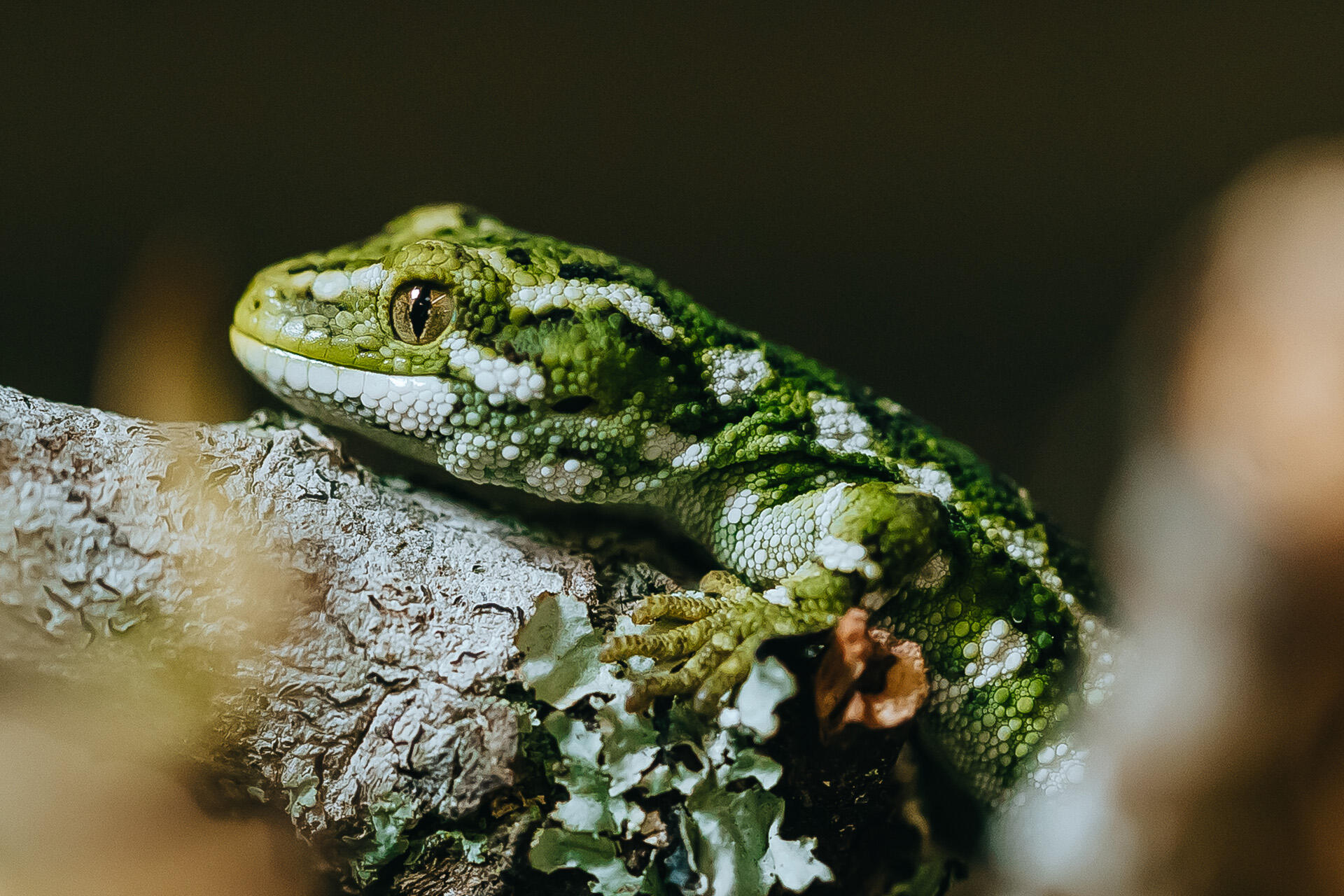
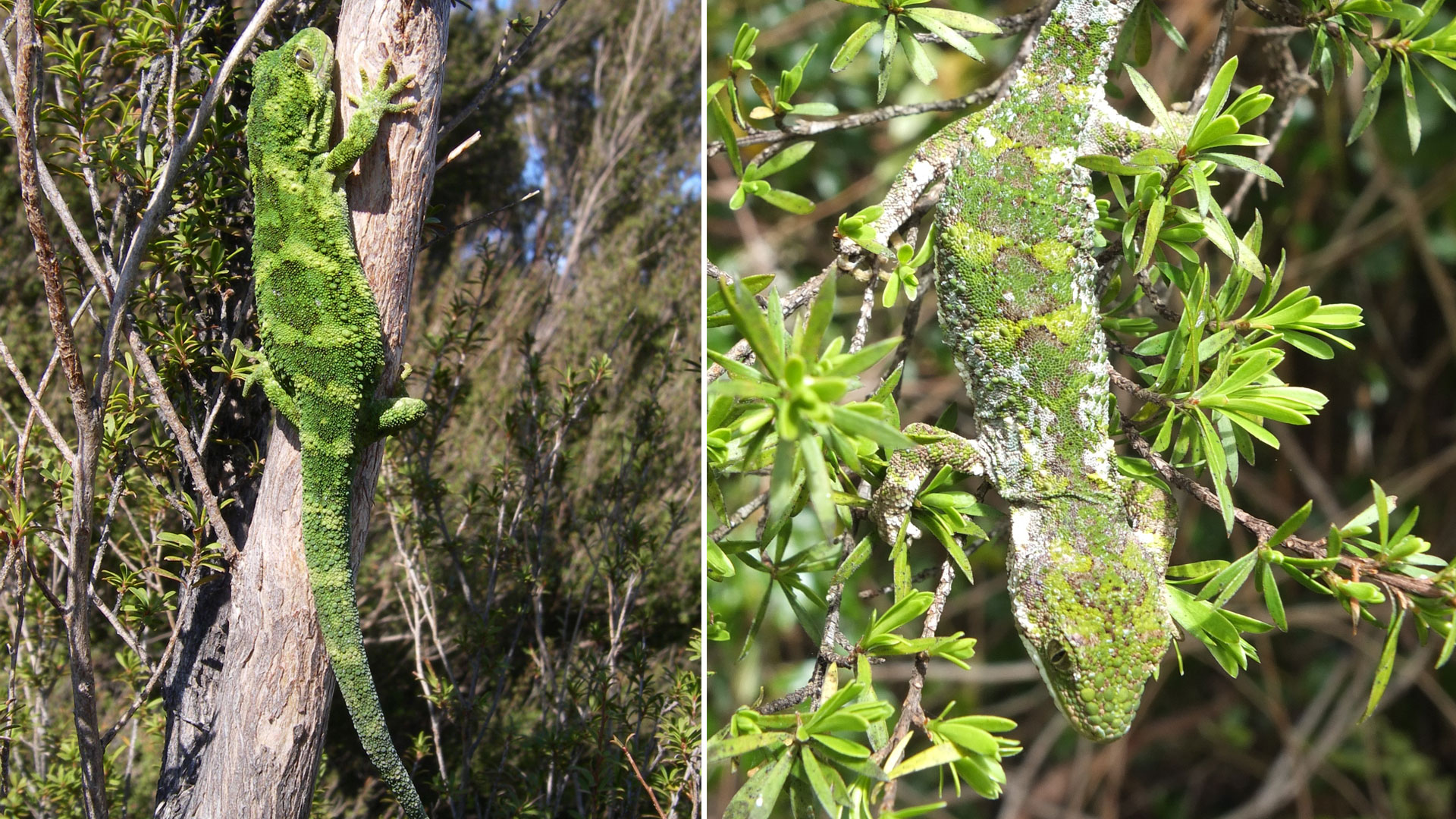
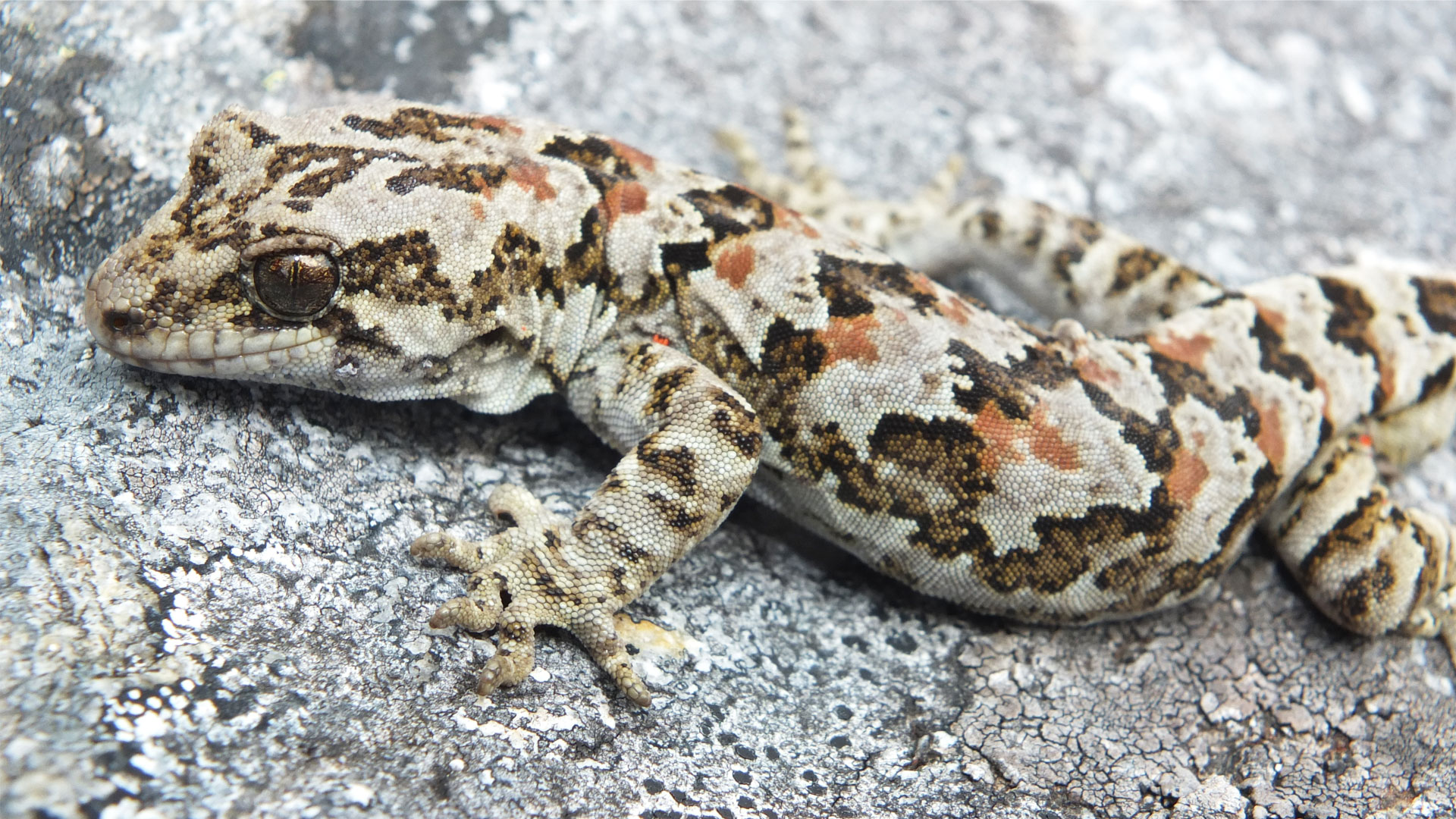
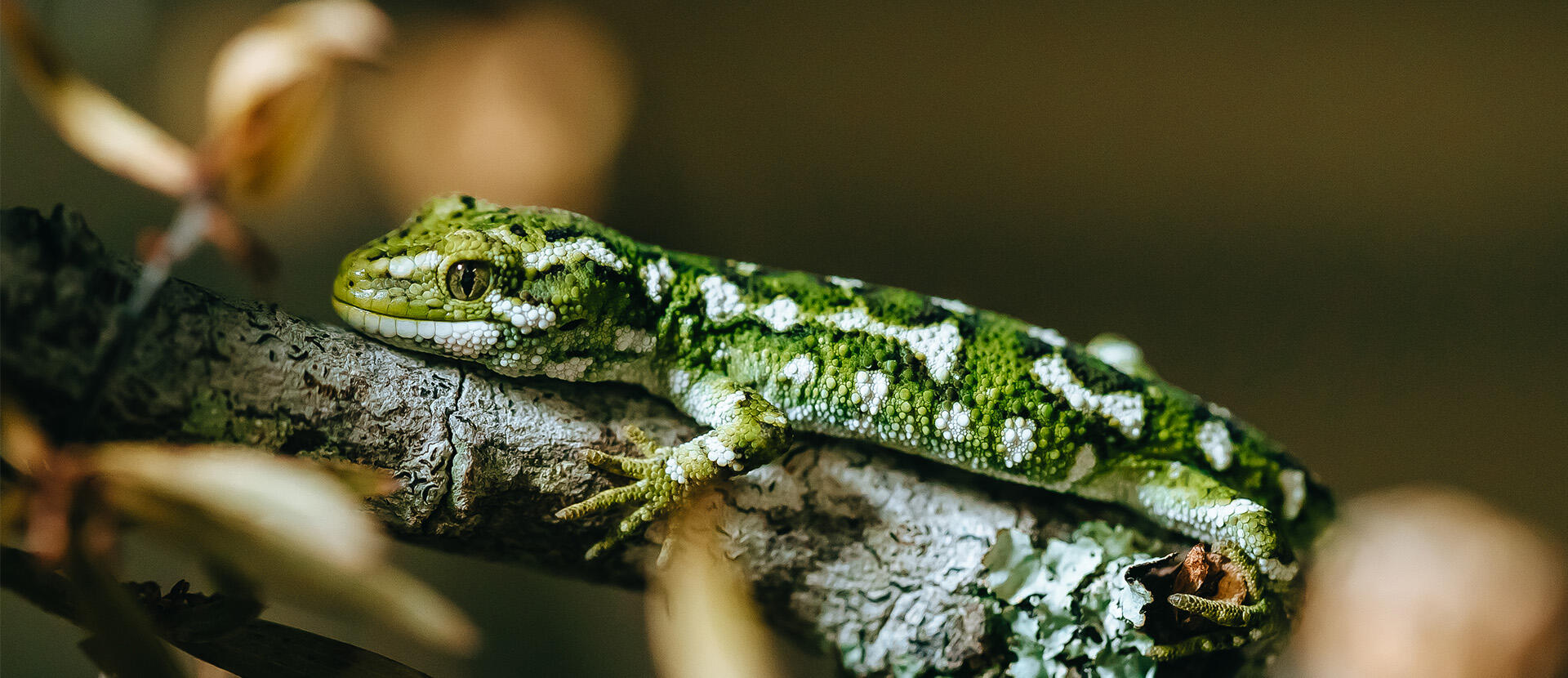
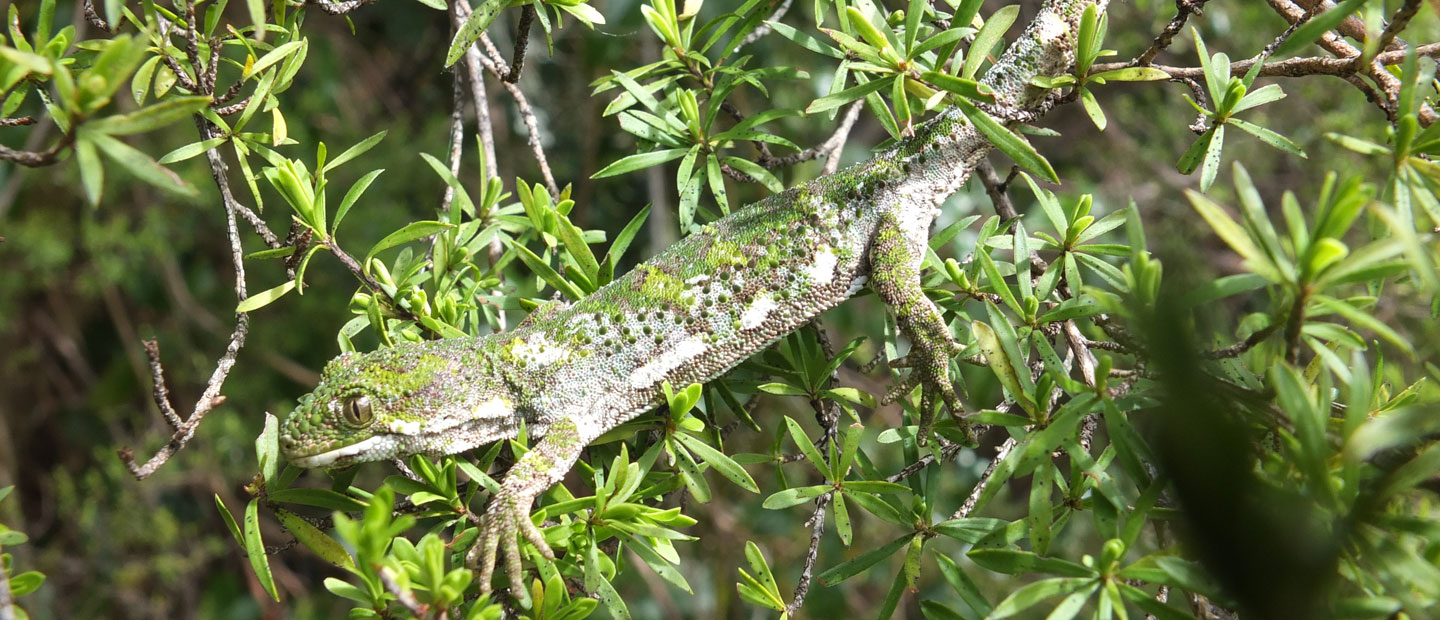
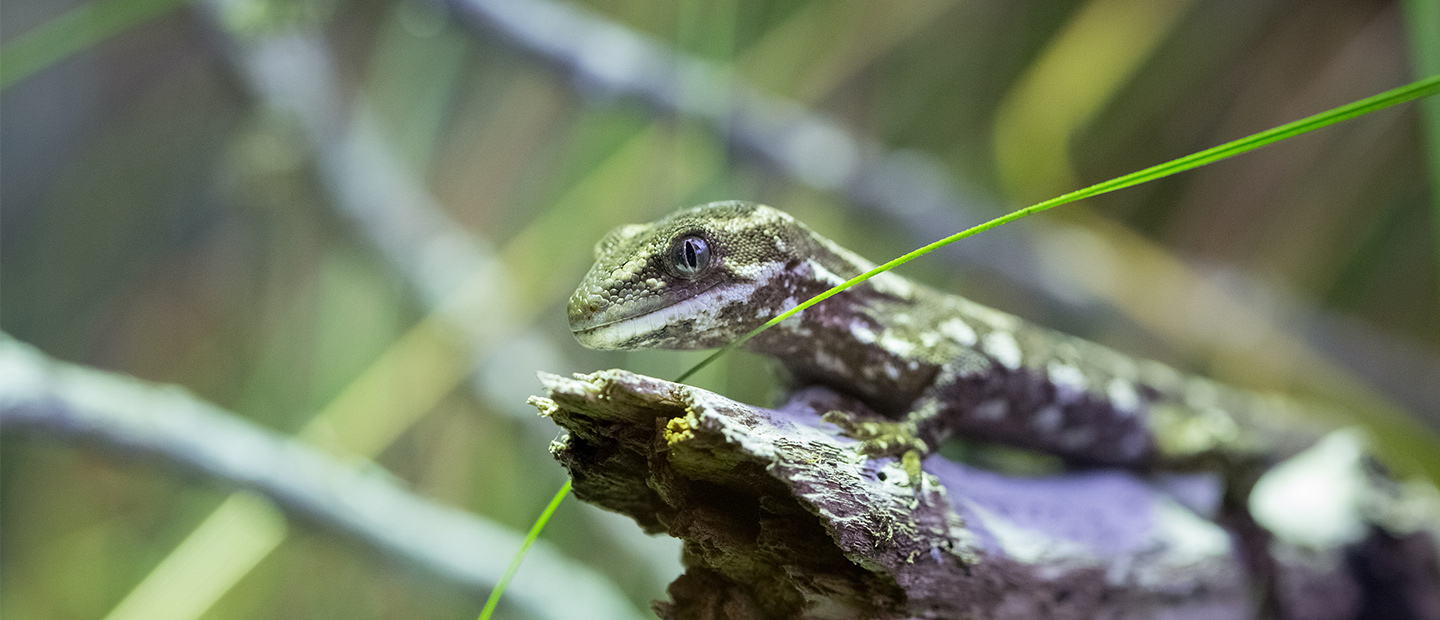
Rough geckos are considered predominantly diurnal, meaning they are most active during the day, which is less common for geckos from outside New Zealand. They spend their time basking in the sun to warm their bodies before carefully moving through foliage in search of food. Tucked within dense vegetation, they pause often to watch and wait, relying on their bark-like scales and forest colours to blend seamlessly into their surroundings.
Long life in the slow lane
Rough geckos are among the longest-living lizards in Aotearoa New Zealand. Living life in the slow lane, some individuals in a zoo environment have been recorded reaching around 50 years of age. In the wild, rough geckos have been recorded living for at least 15 years, and it is likely many live much longer. As research and conservation efforts continue, the secret lives of these quiet forest dwellers are slowly being revealed.
A colourful clue
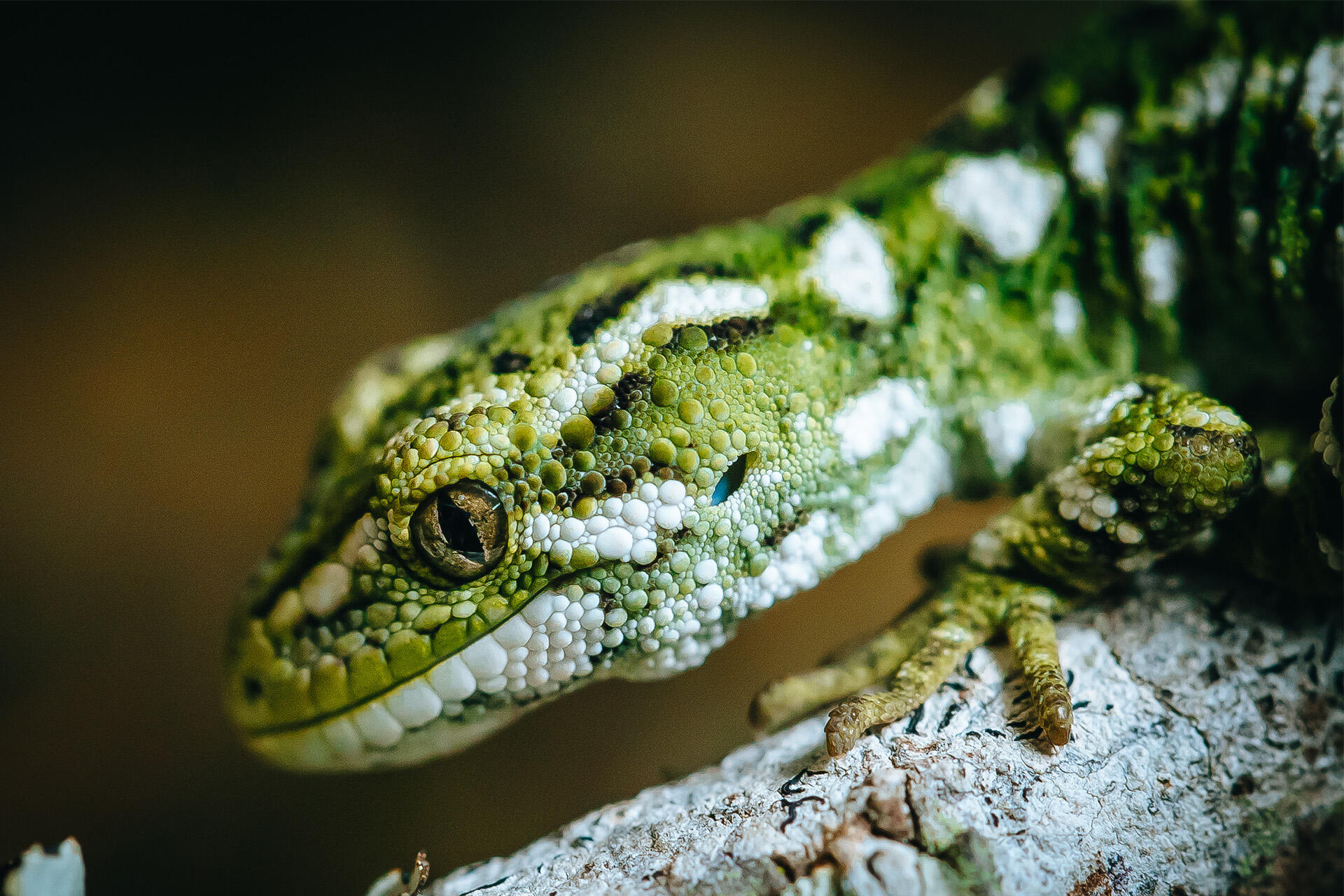
While rough geckos may look similar to other green geckos at first glance, one of the most reliable ways to tell them apart is by looking inside their mouths. Rough geckos have a grey-blue mouth with a pinkish-grey tongue, a subtle but distinctive combination that helps distinguish them from other Naultinus species in the South Island. This hidden splash of colour is an important identification clue.